Buffalo-based sportswriter trying to extend my reach beyond local levels, so doing national stuff here. I've been involved in sportswriting in both the Albany, NY and Buffalo areas since 2014 for multiple publications, and I have editorial experience. My email is aidanjoly00@gmail.com and you can follow me on Twitter @ByAidanJoly
The college basketball season is officially underway across the country. 199 games across the country, with some ongoing as I type this, but there’s still plenty to talk about. Let’s discuss some of my takeaways from night one.
The slate wasn’t good enough
The slate, top to bottom, wasn’t great. There was only one game between power conference teams and that was Memphis-Vanderbilt, two very “meh” programs (but I’ll get into that game in a little bit). But it felt like that was the biggest game of the night. Auburn-George Mason had potential, but it ended up being kind of a flop. Not having the Champions Classic on the first day of the season is a mistake in my mind. The second half of that November 15 doubleheader, Kansas-Duke, is the first ranked matchup of the year. Over a week into the season! Starting up on a Monday didn’t help either.
Scheyer, Neptune shine in debuts
First-year Duke coach Jon Scheyer and first-year Villanova coach Kyle Neptune are tasked with following up two Hall of Famers, both of them at 35 years old. Neptune has a year of head coaching under his belt at Fordham last year, while this is Scheyer’s first head coaching job. Night one was a success for both of them, with Duke beating Jacksonville 71-44 and Villanova taking down city rival La Salle 81-68.
Experienced Kentucky
For the second year in a row, the Wildcats have an experienced team. In Monday’s 95-63 win against Howard, it started a senior and two juniors. It was without rim protector Oscar Tschiebwe, who has a shot at winning a second National Player of the Year award this season and Sahvir Wheeler, who are both seniors, due to injuries. Cason Wallace and Chris Livingston are both stud freshman and NBA Draft picks come June, but this is an older Kentucky team by all accounts.
Memphis taking next step?
The Penny Hardaway era at Memphis has been a tumultuous one. Having kicked off his fifth season at the helm of the Tigers, he reached the NCAA tournament for the first time last year. The Tigers showed even more promise in a nice 76-67 road win against Vanderbilt on Monday. DeAndre Williams put up 17 points on 7-11 shooting, SMU transfer Kendric Davis collected 16 and Alex Lomax had a double-double with 10 and 10. There are still some kinks to be worked out, but this team shows even more promise this season.
Auburn’s high ceiling
Maybe I’m a little higher on Auburn than most, or I overestimated George Mason, but I expected this game to be a dogfight and it wasn’t. The Tiger defense suffocated the Patriots into 19 turnovers as opposed to Auburn’s nine en route to a 70-52 win. Auburn took 15 more shots than George Mason did and also beat them on the offensive boards 22-10. If the Auburn defense can hold up like this, Bruce Pearl’s squad can do great things this year.
Yikes, Florida State
Florida State had a down year last year, going 17-14 (10-10 ACC) and missed the NCAA tournament for the first time since 2016. So, this year is expected to be something of a bounce-back year for the program. It got off to a horrendous start, losing to Stetson, a team ranked No. 314 in KenPom’s preseason rankings. The Hatters hit 14 threes on the way to the win. It might be a long year in Tallahasee.
I want to give a couple quick shoutouts at the end here. Colgate and Buffalo played a great game, matched up well and it came down to the final seconds. Another goes out to Queens College, which took down Marshall in the program’s first game at the Division I level. Finally, one to Arkansas-Pine Bluff, which was ranked No. 361 in KenPom coming into the day and was a just-missed floater off the hands of Trejon Ware away from stunning No. 14 TCU in Fort Worth.
If you know me, or even just of me through social media, you know that one of my first loves is college basketball.
I’ve attended countless of games in my life, that number is easily in the triple digits, I’ve been to 15 NCAA tournament games and I’ve watched thousands of games since I started following the sport.
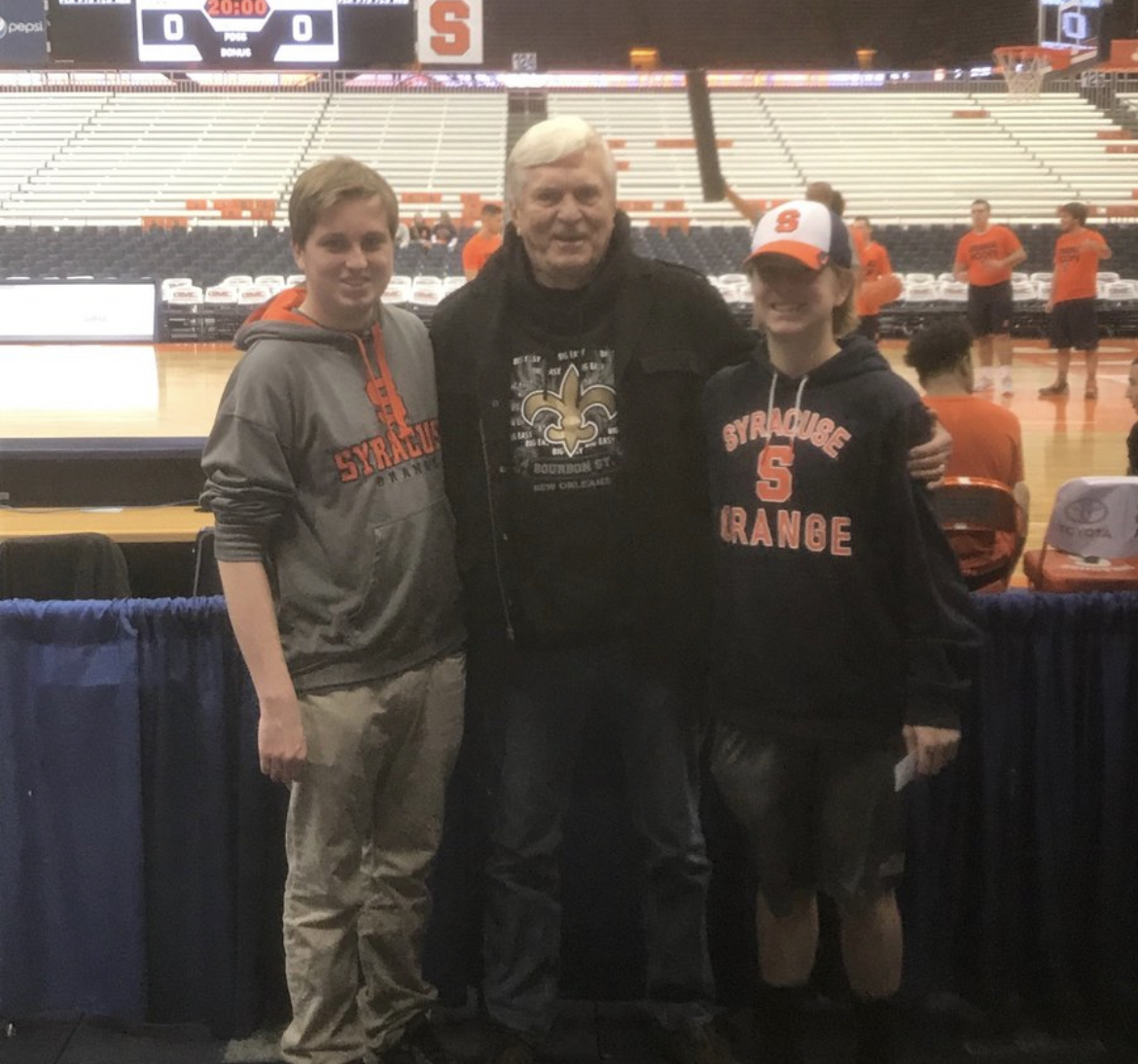
On the eve of a new college basketball season, I can’t help but think about my grandfather, who passed away on October 8.
Papa loved all sports; baseball, football, hockey, horse racing, auto racing, but his first love was basketball and specifically college basketball. He attended Siena College in the 1950s and followed the basketball program for the rest of his life. He took his sons to games when they were kids and eventually started taking his grandkids to games in the mid and late 2000s. I was the one who went with him most of the time.
A lot of this came during Siena’s run of success from 2007-2010, which they went to three consecutive NCAA tournaments and were one of the best mid-major programs in the country. Around this time, he was attending just about every home game and took me to a lot of them. It made me fall in love with the game (it helped that they won just about every time we went, too).
One of my first college basketball memories was watching Siena upset Vanderbilt in the first round of the 2008 tournament at his house. His favorite player was Alex Franklin; I liked Ronald Moore and Clarence Jackson myself.
I first got into it on the national scale around 2010 and started following Syracuse as a fan (and yes, a fan – you tend to lose your individual fandom when you cover a sport), a few years later he got us tickets to go to my first Syracuse game, during the Orange’s magical 25-0 start to the 2013-14 season. The game I went to was a 78-62 win against Villanova.
When I got a little older and decided I wanted to make a career of covering college basketball (my career goals involve covering the sport on a national level), he knew I’d be able to do it. Honestly, it goes back to him taking me to Siena games when I was 7, 8, 9 years old. That’s where it started.
I didn’t know it at the time, but I went to a Siena game with him for the last time this past February, when I visited home for a long weekend. Siena ran out of gas in the second half and lost to Marist 62-53. Everything was as usual – went to the game, listened to the postgame show on the radio on the drive back, talked about what we had just spent the past two hours watching.
I hope that if I achieve my career goal, he’ll be watching and smiling. If that happens, I’ll have to stop back at a Siena game, for old times sake.
The college basketball season starts back up in less than two weeks. Here, we will evaluate the six coaching changes that took place in the Atlantic 1o this offseason.
Davidson: Bob McKillop out, Matt McKillop in
Bob McKillop, the best coach that the Davidson program has ever seen, having led the program since 1989 and is also noted to have been Stephen Curry’s college coach, retired this past June. He amassed over 600 wins and reached the NCAA Tournament 10 times, five of them coming since 2012. He is replaced by his son Matt, who has been an assistant with the program since 2008. This is a great way for the program to “keep it in the family” so to speak and continue to have success moving forward.
Fordham: Kyle Neptune out, Keith Urgo in
Former Villanova coach Jay Wright threw a wrench into the college basketball landscape in April when he announced his retirement and Neptune was immediately named his replacement. Neptune had spent just one season as head coach of the Rams, going 16-16 (8-10 A10) at a notoriously tough place to win. That was a 14-win improvement from the 2020-21 season, while reaching the quarterfinals of the conference tournament for the first time since 2007. Urgo was an assistant and got promoted to his first head coaching job. Urgo is recognized as one of the top assistants in the league and an elite recruiter. He should be able to keep the momentum going while he brings in a strong recruiting class.
George Washington: Jamion Christian out, Chris Caputo in
It wasn’t long ago that Christian was regarded as one of the top young coaches in our sport, but flamed out at George Washington, going 29-50 (17-26 A10) 0ver three seasons. Caputo is a Jim Larranaga disciple, who started with him at George Mason and then followed him to Miami. Having long been considered a future head coach, and still just 42 years old, this feels like a perfect fit for him to succeed.
La Salle: Ashley Howard out, Fran Dunphy in
He’s baaaaaaaack. After the Explorers canned Howard after four lackluster seasons, they bring the 74-year-old Dunphy out of retirement to lead the program. The Philly legend won over 300 games as the head coach of Penn from 1989-2006 and then 270 more at Temple until he stepped down following the 2018-19 season. This hire brings credibility and relevance to a program that has lagged behind the other Philadelphia schools in recent years.
Massachusetts: Matt McCall out, Frank Martin in
This is a program that needed a bit of a kickstart and they got it in Martin. He is the third-winningest coach in program history for South Carolina, which he led from 2012 until he was fired at the end of this past season. He also led the Gamecocks to its only Final Four in program history in 2017. The goal here will be to restore the once-proud program back to relevance. With his well-documented energy and enthusiasm, this feels like a great fit.
Rhode Island: David Cox out, Archie Miller in
Miller was once one of the top coaching prospects in basketball, bringing Dayton to four straight NCAA Tournaments from 2014-2017, reaching the Elite Eight once. However, he was scooped up by Indiana and floundered, treading water for four years until he was fired following the 2020-21 season. After a year out of coaching, he’s back in the same league where he had that success in Dayton. Rhode Island is definitely a place you can win and having a name like Miller at the helm will almost surely be able to help with recruiting.
Before each Buffalo Bisons home game, the song “Years in the Making” by the Arkells blares over the loudspeakers at Sahlen Field as a highlight video plays on the scoreboard.
The song is encapsulating of the last few years. This Bisons season has literally been years in the making.
The last time the Bisons played a full season downtown was in 2019, before the COVID-19 pandemic began. 2020 forced the entire minor league season to be canceled. However, there was baseball in Buffalo as the Toronto Blue Jays, the Bisons’ parent club, were forced to play the entirety of the abbreviated 60-game slate in 2020 in Buffalo due to border restrictions. No fans were able to attend the games.
While the Blue Jays were in Buffalo, they footed the bill for significant renovations to Sahlen Field for it to be major-league ready. This included improved clubhouses, indoor batting cages and a new lights system. When one walks through the clubhouse area, you see photos of several Blue Jays players, with about half of the branding being Blue Jays and the other half Bisons.
“It’s just a feeling of like ‘hey, this is really nice and this is cool to come into.’ We battled for half of a season and did well and now we’re getting into a place that a major league team helped renovate. It’s neat,” said Bisons manager Casey Candaele, who is in his second season at the helm. “It’s beautiful. They did such a great job. It’s very big and spacious, so it’s nice.”
At the beginning of the 2021 season, the border was still closed, so the Blue Jays started their season at the team’s spring training facility in Florida before moving up to Buffalo for the summer months and were able to play in front of fans. Meanwhile, the Bisons played their home games in Trenton, N.J. at Arm and Hammer Park, the former home of the Class AA Trenton Thunder, who’s affiliation was dropped as part of Major League Baseball severing ties with several minor league teams across the country. The Bisons played as the Trenton Thunder, wearing their uniforms and being called by that team name at the stadium.
As a result of that, the Thunder, who ultimately joined the MLB Draft League, a league designed for collegiate players to improve their draft stock ahead of the draft, played their home games at Rider University’s Sonny Pittaro Field.
“In that area, there’s some other teams that they root for and we happened to be playing all those teams all the time. But I must say, the fan support for us was just as strong, if not stronger, than the visiting teams that came in like Lehigh Valley and Scranton and Worcester and all those teams. We were not overwhelmed with fan support from the opposing teams. So it was actually great,” Candaele said.
With the border opening in July and the Blue Jays able to return to Toronto in late July, the Bisons returned to Buffalo in August and played the remainder of the home slate downtown.
This strange arrangement did not hurt the Bisons at all, winning 29 games in Trenton and finishing the season with a mark of 79-47, good for second place in the league. At the season’s conclusion, Candaele was named the Triple A-East co-manager of the year in his first season with the team.
“It was kind of tough but the players handled it very well. Any time you have to rearrange anything and you move from wherever you’re playing at a home stadium and then you have to move to another one, it was a bit tough,” Candaele said. “But coming back here to Buffalo was actually a joy and kind of invigorating for our players I think because we were in Trenton and they treated us great there and we had great support but then we got to come back to our home park.”
Now, the Bisons franchise has normalcy for the first time in years. A group of players and coaches who all have different journeys and stories to tell.
—————————————————————
The manager himself has a story to tell.
Candaele, 61, played in the major leagues from 1986-1997 with the Montreal Expos, Houston Astros and Cleveland Indians. He also played 270 games in a Bisons uniform from 1995-1997.
He has a bit of unique history. His mother, Helen Callaghan St. Aubin, as well as his aunt, Marge Callaghan, played in the All-American Girls Professional Baseball League, a women’s professional baseball league that was established during World War II while many male major league players were fighting in the war. That league was depicted in the 1992 film “A League of Their Own” and is considered to be the forerunner of women’s professional sports. Ironically enough, his brother Kelly is a filmmaker and a PBS documentary that he worked on about the league was the inspiration for the movie. Kelly Candaele ended up being one of the main writers for the movie.
Candaele and his mother represent the only mother-son combination to have both played professional baseball. His mother is considered to be one of the league’s greatest players, having won a batting title with the Fort Wayne Daisies in 1945 and stole 354 bases over a 388-game career.
“My mom really didn’t talk about it a lot. She would mention like ‘I played baseball in this league’ and we’d be like ‘what are you talking about?’ Nobody really knew anything about it, but then my brother did research and did a documentary on the league and then the movie was adapted,” Candaele said. “Just opening that up and how unique it was at the time with women playing baseball. They were ahead of their time as far as what was expected of them… just being able to learn that later in life and understand, it was really cool and really neat.”
As Candaele said, despite his mother’s background, she didn’t have a ton of influence on his baseball career, but did teach him how to handle himself mentally with the game, en route to his major league career.
“She would throw me batting practice and hit ground balls and things like that, but I thought every mom was doing that, but she was pretty good at it,” Candaele said. “The one thing she told me was you can never have a bad day hustling, so that was what I modeled my game after… but my mom was a better player than me.”
Helen Callaghan St. Aubin died in 1992 at age 69, just over five months after the release of the film. Marge passed away in 2019 at 97. Both are members of the Canadian Baseball Hall of Fame.
Marge (left) and Helen Callaghan.
Candaele’s coaching career began in 2016, when the Seattle Mariners hired him to be their first base coach and spent two seasons doing that. He then joined the Blue Jays organization and managed the Dunedin Blue Jays in the Class A-advanced Florida State League in 2018. He was then moved to manage the Class A-short season Vancouver Canadians in the Northwest League. He was hired to manage the Bisons ahead of the 2021 season. Through his coaching career, his goal has been to help players develop so they can be productive in the major leagues.
“It’s a great job, it’s a great place to be. There’s a lot of tough days that come with it being in this profession, a lot of failure and helping them cope with that but we want them to guide them in the right direction,” Candaele said. “It was always a passion of mine to kind of give some of what I learned, what people taught me, to players that are younger. If they take a little bit, or one thing that could help them in their career, then that’s satisfying.”
—————————————————————
The 2021 season was supposed to be Josh Palacios’ big break.
A 2016 fourth-round pick out of Auburn and a native of New York City, Palacios put up good numbers during the 2019 season with the Blue Jays’ Class AA affiliate in Manchester, N.H. and after the canceled minor league season in 2020, was ready to make another step up. He was called up to the Blue Jays for the first time on April 9, 2021 and made his major league debut that night, a game that was played in Dunedin, Fla., the site of the Blue Jays’ spring training facility. The Blue Jays played in Dunedin for the first two months of the season in order to avoid the harsh Buffalo springs before they came up north to avoid the hot, humid Florida summers.
One day following his major league debut, Palacios collected his first four big league hits, drove in a run and scored four times himself, helping lead the Blue Jays to a blowout 15-1 victory against the Los Angeles Angels.
He was optioned back to the Bisons on April 24 so the major league club could make room on the roster for more pitchers, but Palacios had done it. He was a major league player.
“It was amazing. The big leagues are everything you want it to be and we were winning too on top of that. And all of those guys I’ve played with since I was young, so it was pretty cool just to see all of those guys I played in the minor leagues with on major league fields, doing things on TV,” Palacios said.
Then, disaster struck. In a game on May 9 against the Worcester Red Sox, Palacios was hit by a pitch, breaking his hand and sidelining him for nearly three months. After a few rehab games in the low levels of the minors, he returned to the Bisons on August 13 and made it back up to Toronto for a three-game stint in late August. This time, it was in Toronto as the border had reopened. He was sent back down to Buffalo on August 30 to make room for star outfielder George Springer, who was returning from the injured list.
Disaster struck, again. On September 3 in a game against the Scranton/Wilkes-Barre RailRiders, Palacios was injured for a second time, fracturing the Hamate bone in his wrist, forcing surgery and in turn, ending his season.
Now, Palacios is healthy again and was ready to play on Opening Day. In his first at-bat of the new season, Palacios launched a two-run home run to right-center field to give the Bisons a 2-0 lead in the first inning against the Iowa Cubs and carried it to a season-opening 3-2 win. He added a second home run during the Bisons’ third game of the season.
First home run of 2022!@BlueJays' Josh Palacios drills the first dinger of the Minor League season for the @BuffaloBisons.
“That was amazing. Just to have that be a home run after not playing all year, finally being on the field, got those first game jitters, hear the fans going. It was just a blessing,” Palacios said. “I missed baseball. This is my passion, this is all I do, so being out all year and watching the games and not being able to compete, not being able to go out there with my guys… it was tough, but now being back out on the field with all my bros is just a blessing.”
Note: Shortly after the Bisons’ opening series, Palacios was designated for assignment by the Blue Jays. He is now a member of the Washington Nationals’ organization.
—————————————————————
At 29 years old, catcher Kellin Deglan is still chasing his dream.
Deglan was selected in the first round of the 2010 MLB Draft by the Texas Rangers out of R.E. Martin High School in Langley, British Columbia, a suburb of Vancouver. Deglan was not able to play high school baseball for his school, but attracted attention with the Langley Blaze of the British Columbia Premier Baseball League, a league that has produced former stars such as Justin Morneau and Brett Lawrie.
He spent seven years with the Rangers’ organization, but was hampered by a lingering shoulder injury throughout. In his time with Texas, he never got any higher than Class AA, spending part of the 2015 season and the entirety of the 2016 season with the team’s club in Frisco, Texas. It also included stops in Phoenix, Spokane, Wash., Hickory, N.C., Myrtle Beach, S.C. and Adelanto, Calif.
In December 2016, Deglan signed a contract with the New York Yankees and had his shoulder surgically repaired, missing the entirety of the 2017 season.
Nine years after he was drafted, he made his Class AAA debut in 2019. In August 2021, he was traded from the Yankees to the Blue Jays and reported to Buffalo, where he has been since.
In the twilight of his 20’s, Deglan has spent 12 years in the minor leagues. He has played over 700 professional games.
None of them have come at the major league level.
“Baseball is all I know. I got signed out of high school, so I love playing baseball. I love being with the guys. It’s hard being away from my family, I wish they could be here more often, but it’s a pretty good gig playing baseball,” Deglan said.
Deglan’s wife, Ashley, is planning on splitting time between Buffalo and the family’s home in Georgia this season. They were together in Florida for spring training this year but are planning on loosely alternating months between Buffalo and Georgia. It also depends on if his mother can take care of the couple’s son, who is 21 months old.
“It’s definitely a little bit hard. FaceTime makes everything so much better. They were with me in spring training for the five or six weeks I was down there… so that was great,” Deglan said. “I’m able to FaceTime them every day, if it’s not a FaceTime it’s a call.”
Despite no big-league experience, Deglan has seen success before. The bulk of that came in the 2014-15 offseason, when he went to Australia to play winter league ball. He played for the Melbourne Aces and had a ton of success, breaking the league’s single-season home run record, finishing the 46-game regular season with 16 round trippers. That record has since been tied, but Deglan’s name still sits in the league’s record books.
“We got to fly to all of the big cities over there, people were amazing. We had a good group of guys on the team. We played four days a week, one off day, and then two practices so the schedule wasn’t too overbearing after playing a full season. I really enjoyed it,” he said.
He has also spent time with the Canadian national team, taking part in the 2013 World Baseball Classic qualification rounds, the 2015 Pan American Games, two appearances in the WBSC Premier12 tournament in 2015 and 2019, as well as the 2019 Pan American Games qualifier. He has played in Germany, Taiwan, Brazil and South Korea for these tournaments representing his country. He won a gold medal at the 2015 Pan American games, which was played in Toronto.
The major leagues may or may not happen for him. Now, he is focused on being a leader and helping those around him get better as they all chase their dream.
“It’s a lot of things. A lot of the experience that he has, I can learn from him. He’s a great teammate because he’s willing to help as much as he can” fellow Bisons catcher Chris Bec said. “As a catcher, we’re all leaders and he does a good job with that role and as a leader, you listen and you teach. He does a great job with that.”
At the end of the day, Deglan just wants to help.
“I’m just trying to help them project confidence, try to get on the same page as them and just be a good catcher back there,” Deglan said. “The Blue Jays’ pitching department is pretty advanced. Guys know what they need to work on and their getting all of the feedback from [pitching coach] Jeff [Ware] and our bullpen coach [Brendan Kelly]. They know what they’re working on.”
—————————————————————
Joe Biagini is a bit of a character.
Biagini, 31, spent the better part of an hour before a Thursday evening game that ended up being postponed due to rain (something those in the baseball industry refer to as “banging it”) working on throwing from a flat ground and then went into the bullpen on his own to work on his mechanics.
When I approached him to talk on his way back to the dugout, he requested that I give him a hug before I turned the recorder on (I obliged).
He’s also been on The Tonight Show Starring Jimmy Fallon, just to give the late-night talk show host a high five.
Biagini has over 200 games of major league experience between the Blue Jays, Astros and one appearance with the Chicago Cubs on the final day of the season last fall, with the Cubs well out of playoff contention. None of them were as memorable as August 3, 2019, when he pitched one inning of relief as part of a four-pitcher no-hitter as the Astros blanked the Seattle Mariners at Minute Maid Park in Houston, 9-0.
This is his second stint with the Blue Jays organization. He was selected by the San Francisco Giants during the 2011 MLB Draft, but was traded to the Blue Jays while he was in the minor leagues, making his major league debut in 2016. He spent three and a half seasons as a mainstay in the Blue Jays’ bullpen, while also starting 22 games. He was traded to the Astros at the 2019 trade deadline, just four days before he made history with Houston. He spent the 2020 season in the Astros’ organization, before spending the 2021 season at Class AAA with the Cubs, outside of his lone major league appearance. He signed back with the Blue Jays on a minor league deal in early March.
“I feel that the familiarity here is really nice, besides them knowing all of my jokes already so I have to come up with new ones,” Biagini said. “But, the familiarity is nice just to know what they expect from me and I think the organization has always been really honest with me and very up-front and they were the ones who gave me my first opportunity in the big leagues, so that was pretty cool. It’s always nice, it almost feels like a loyalty coming back to this organization. It would be a cool story to get back to the big leagues with this organization again.”
The biggest thing right now for him is transition to working on being good at both starting and relieving, to now just focusing on being a full-time relief pitcher.
“I would say, just understanding what I’ve had success with in the past and kind of embracing that role, going back into a bullpen role full-time for the first time in a while and I think that’s where I’ve experienced success. My ultimate goal while coming up was always to be a starter and I had a little bit of success but it was pretty inconsistent,” Biagini said. “If I was a couple years younger maybe I would stick with that and give it another couple years, but now it’s embracing the role that I’ve had success in and kind of focusing on that.”
His work ethic and wealth of experience is something that others notice as well and hope that he can be someone who leads by example with the extra work that he is constantly putting in.
“His background, the experience that he’s had in the minor leagues and especially in the big leagues, we’re looking to get him going this year and hopefully get him to the big-league club and he can help us win,” Ware said. “Some guys who maybe haven’t done it but they’ve thought about it before, maybe they didn’t want to be the guy who goes over there by himself and does his thing, I think that kind of opens up a window for some of those guys that may be like that and compete off that, maybe ask some questions, because Joe is really easy to talk to.”
At the end of the day, Biagini still has the same goal of every player at his level: to get to the major leagues.
“Just kind of trying to, basically, employ the attitude I had in that role in the past that was successful in the big leagues. I think that combination of things gives me the best chance to get back there and re-establish myself.”
—————————————————————
The Blue Jays see Samad Taylor as a future major leaguer.
Taylor, at 23 years old, is one of the youngest players on the Bisons’ roster. He’s also one of the most promising.
Taylor was drafted in the 10th round of the 2016 MLB Draft by the Indians out of Corona High School in California, about 50 miles from Los Angeles and just under 100 miles from San Diego.
He had a hot start to his professional career, hitting .293 in the rookie-level Arizona League in the back half of 2016. He was promoted to short-season Class A for the start of 2017, doing well there, but ended up being part of a trade at the July 31 deadline that year, being moved to the Blue Jays as a prospect in a deal that landed the Indians submarine-throwing veteran reliever Joe Smith. Initial success with the Blue Jays earned him a promotion to a full season league for 2018.
Things changed at the plate. He struggled in the 2018 and 2019 seasons, hitting .230 in the former and just .216 in the latter.
A season off in 2020 may have been a benefit. He spent the 2021 season with New Hampshire and hit .294 and mashed a career-high 16 home runs in 87 games, even more impressive considering he stands just 5’10” and is listed at 160 pounds.
“Just staying within myself in the box and not doing too much, sticking with my approach and my plan in the box and just doing what I had to do to put together productive at-bats and it worked out. I’m glad I have the numbers to show for it that I had last year, but other than that, everything was just mental,” Taylor said.
He stressed the importance of being in a good place mentally and knowing that if you have that, it will lead to success.
“Just slowing the game down, because everybody knows, the game can speed up on you. Breathing and then just finding little focal points that I can stare at while I’m in the box that can bring the game back to slow. Those have been some things I’ve worked on mentally with the game last year,” he added.
Taylor is now ranked as the No. 16 prospect in the Blue Jays organization on MLB’s prospect rankings, but Taylor said he doesn’t pay attention to that kind of thing, just focused on his play and wanting to be a part of the Blue Jays’ future.
“That’s the easiest way to fall into a mental hole because if you look at them and you don’t produce the way you feel like you’re supposed to produce because you’re a prospect, that’s the easiest way to start thinking negative. The last thing any baseball player needs to do is think negative,” he said. “But I’m not done yet. I got another step to go and that’s the big leagues.”
—————————————————————
Casey Lawrence takes the road less traveled.
Lawrence was born and raised in McSherrystown, Pennsylvania, right on the southern border of the state. He attended Albright College, a small, Division III, liberal arts school in Reading, with a student population of under 2,000. He holds the school’s all-time strikeout record on the mound and also dabbled in playing first base, where he hit .256 with four home runs and 41 runs batted in.
Doing this at a tiny Division III school was not enough to get him enough exposure to get drafted. He signed with the Blue Jays following the 2010 MLB Draft as an undrafted free agent. Instead of a signing bonus, the Blue Jays paid for a plane ticket for him to fly to Dunedin.
“It was definitely a process. Took it day-by-day, step-by-step and had a lot of help along the way with teammates and coaches. It was just with a goal in mind of getting better every day. I was never a top prospect, but I was just consistent,” Lawrence said.
There are currently four players from the Division III level playing in Major League Baseball: Collin McHugh of the Atlanta Braves, Josh Fleming of the Tampa Bay Rays, and Yankee teammates Tim Locastro and Stephen Ridings.
He spent seven years in the minor league system before finally getting his break in April 2017, when the Blue Jays called him up for the first time. He struggled, and one month later was designated for assignment. Three days later, he was claimed by the Seattle Mariners, where he pitched in 34 games across parts of two seasons with the big-league team.
“It was definitely a dream come true; it was everything I could have wished for. I was able to be a part of some pretty good ballclubs. We didn’t get to where we wanted to get to either year, but it was a learning experience,” Lawrence said.
Following the 2018 season, his career took a turn to the other side of the world. He signed with the Hiroshima Toyo Carp of Japan’s Nippon Professional Baseball and made 22 appearances with them. He spent the 2020 season in the Minnesota Twins’ organization before making another signing outside of Major League Baseball. In March 2021, he signed with the York Revolution, an independent team that is part of the Atlantic League of Professional Baseball. However, right before the season started the Blue Jays again picked him up and he has spent the last two seasons in the organization. At 34 years old, he is the oldest player on the Bisons’ roster and has a goal in mind of getting back, but also really wants to help young players.
“I think it’s more of a testament to the leaders I had in my career when I was coming up. Casey Kotchman, Matt Dominguez, Wade LeBlanc, those kinds of guys, they kind of showed me the ropes. Now, it’s one of those things where it’s a fraternity and you pass those lessons down to the next generation. We have a really good group of guys here so it’s pretty easy for me,” he said.
—————————————————————
At the end of the day, this is a whole Bisons team that is hoping for success, both individually and for the team as a whole. One can see that one team can have so many backgrounds, so many different stories coming together as one unit. The Bisons are an example of that.
“It’s up to them. They’ll find what their rhythm or niche is, what kind of clubhouse they want. There’s a lot of great guys in there, good people, so they come every day and come to play and they have a desire to do better, get better,” Candaele said. “That in and of itself is a win, that’s success to me.”
The NCAA Tournament is all the way back, folks. After four days of upsets and stunning endings, the field has been trimmed to 16. We have some of the top teams still alive, but some surprise teams are still hanging around. Now we have to focus on what is to come. That being said, here’s a ranking of the Sweet 16 teams, ranked backwards.
16. Oral Roberts
After pulling off back-to-back stunning upsets of Ohio State and Florida the Golden Eagles are still alive, becoming the second 15-seed in tournament history to reach the Sweet 16. They have gotten big buckets and big stops when they need them. The nation’s leading scorer in Max Abmas and Kevin Obanor have become heroes of the tournament. The defense has been a question mark all year and they will have their hands full with Arkansas, one of the best offensive teams in the country. However, it’s worth noting that they led by 10 at halftime against the Razorbacks in a buy game back in December before collapsing in the second half.
15. Oregon State
If it weren’t for Oral Roberts, the Beavers would be the most surprising Sweet 16 team. Picked last in the Pac-12 preseason poll, they stormed through the league tournament, earned an automatic bid and picked off Tennessee and Oklahoma State in the first two rounds. Including the postseason, it has won eight of its past nine games, Ethan Thompson and Jarod Lucas have been very good in that stretch. They have Loyola Chicago in the Sweet 16. Will the run come to an end? It’s tough to say.
14. UCLA
The Bruins were on the ropes in their First Four matchup with Michigan State, but came back to force overtime and win the game in the extra session. In the main bracket, they pulled off an upset of BYU and blew out 14-seeded Abilene Christian, which stunned Texas in the first round. Johnny Juzang has become one of the most electric players in the tournament, averaging 22.3 PPG in the team’s three tournament games. They will have to find a way to keep their offense up against Alabama, a great defensive team.
13. Syracuse
Well, who would have thought? After backdooring their way into the tournament by playing well at the right time, the Orange are back in the Sweet 16. Buddy Boeheim and Joe Girard III have been dominating from deep and the 2-3 zone is once again proving deadly in March. They have a tough game against a Houston team that has one of the best perimeter defenses in the country and they rebound the ball very well. I personally don’t expect Syracuse to move on, but they’ve surprised me before.
12. USC
The Trojans kicked in the teeth of Kansas on Monday night in the second round, beating them by 34 points, the Jayhawks’ worst loss in any game since 1974(!). Evan Mobley has been a star through the first two games on both sides of the ball. It’s tough to see them shooting as well as they have moving forward, but a matchup with Oregon gives them a real chance to move on.
11. Oregon
Speaking of the Ducks, here they are. Oregon dominated Iowa in the second round on Monday afternoon but that may have had more to do with Iowa’s defense, which was a real issue all year, or Oregon’s offense. Chris Duarte looked great though, scoring 23 points on 9-12 shooting. The Ducks are a big, versatile group with good guards. The lone conference matchup of the Sweet 16, USC beat the Ducks 72-58 back on February 22.
10. Creighton
This group barely survived UC Santa Barbara in the first round but made sure Ohio never had a chance in the second round, beating them 72-58. The Bluejays are a tad inconsistent as they can either look really good and not miss from deep or be the team that lost four games from February 3 on. They need to be able to shoot the lights out in the next round as they face Gonzaga. Marcus Zegarowski will need to have a huge game if they want to have a chance to move on.
9. Villanova
The Wildcats were another team that took advantage of the road it had, beating both Winthrop and North Texas by double digits to get here. The Wildcats have looked better than expected without Collin Gillespie. Jeremiah Robinson-Earl has been the guy that Jay Wright has looked at to fill the void and he has done a good job at doing that. In the next round, they need to play even better as they face Baylor.
8. Houston
The Cougars looked dead in the water in the second round against Rutgers, but a late run put them back in the game and pushed them over the edge to move on. DeJon Jarreau, a senior who dealt with a painful-looking hip pointer, valiantly played through the injury and made big shots late despite being in obvious pain. They obviously want him to be healthy for the next round as they face Syracuse and eventually try to make the Final Four.
7. Florida State
After advancing past UNC Greensboro in the first round the Seminoles took advantage of one of Colorado’s worst offensive games of the season, winning 71-53 and getting back to the Sweet 16 for the third tournament in a row. The issue with the team has been the turnovers, but they play very good defense which helps erase those question marks a little bit. They face Michigan next. They are a good team, but it’s tough to see them being the last team standing, even out of this region.
6. Arkansas
Arkansas is in the Sweet 16 for the first time since 1996. After blowing out Colgate, they snuck past Texas Tech in a thrilling finish to get them here. Justin Smith, Jalen Tate and Davonte Davis have all been fantastic through the first two games. They have the most favorable Sweet 16 matchup from anyone left, drawing Oral Roberts. They are young, which may hurt them at some point, but they have a real shot at going to the Final Four.
5. Loyola Chicago
Everyone is finally realizing. Loyola Chicago was the most under-seeded team in this tournament. (How the committee treats mid-majors is another conversation for another day, though). They are a real Final Four threat and they proved that by not only beating Illinois, but looking like the better team the entire 40 minutes. Cameron Krutwig was dominant in the second-round win with 19 points and 12 rebounds. They also boast one of the best defenses in the country. They should be the favorite to get out of the topsy-turvy Midwest region and I’ll even go as far as saying they are a threat to beat any of the teams left.
4. Alabama
The Crimson Tide didn’t look great against Iona but finally found something late and pulled away. Now, after a second-round blowout of Maryland, they look like a Final Four contender. Jaden Shakelford and John Petty Jr. were both making shots from deep, which is what they have gotten all year. They should have enough to get past UCLA with relative ease, but a potential face-off with Michigan looms in the Elite Eight. The program has never been to the Final Four. Could Nate Oats’ group be the first?
3. Michigan
This is the team that stands in Alabama’s way. They have not had Isaiah Livers for the first two games of the tournament but that has not been a problem. In the second-round game, LSU hung around in the first half, but the Wolverines used a strong second half to pull away. This team has stars like Hunter Dickinson, Franz Wagner, Eli Brooks and Chaundee Brown Jr., making them both a Final Four and national championship threat. They are the lone hope for the Big Ten to win a national title, something the league has not done since 2000.
2. Baylor
It looks like the Bears are finally returning to form. The defense lost a step after a COVID pause in February but have seemed to re-gain it, winning by double digits against a Wisconsin team that had just kicked the teeth of North Carolina in. If that holds to form moving forward, that is not good for other title contenders. On offense, the trio Jared Butler, MaCio Teague and Davion Mitchell remains among the scariest in the country. They face Villanova next and look to make the Final Four for the first time since 1950.
Gonzaga
Stunning, huh? Gonzaga has looked in the tournament like they looked all year, with a 98-55 win in the first round against Norfolk State and then beat Oklahoma by 16 on Monday, despite the Sooners hanging with them for the first 10-15 minutes of the game. The Bulldogs continue to look like the best team in the country and the likes of Drew Timme, Jalen Suggs and Corey Kispert help that notion. Seemingly, the only way to beat the Zags is to wear them down and get them into some foul trouble. No team has been able to successfully do that all year. They are still the favorites to win this tournament and become the first team since Indiana in 1975-76 to be an undefeated national champion.
After two years of waiting, the day is finally almost here: the start of the NCAA Tournament. 68 teams have descended on Indianapolis and will start play this weekend. Here’s some of what could happen in the next weekend and some predictions!
West Region:
Gonzaga, the best team in the country, is the No. 1 overall seed in the tournament and is in this region after a 26-0 campaign and winning the West Coast Conference. They have some of the best players in the country in Corey Kispert, who is a finalist for National Player of the Year as well as Drew Timme and star freshman Jalen Suggs, all of whom will have a major impact over the next couple of weeks. The Bulldogs are my pick to win the national championship, which would be the first in program history.
Their biggest competition in this region is Iowa. The Hawkeyes boast star senior Luka Garza, who has arguably been the best player in the country all season, averaging 23.7 points, 8.8 rebounds and 1.7 blocks per game. The Hawkeyes went 21-8 this season and 14-6 in Big Ten play, a league that sent nine teams to the tournament, the most of any conference. Joe Wieskamp and Jordan Bohannon are also very important players for Fran McCaffrey’s bunch. Expect an Elite Eight matchup of Iowa and Gonzaga. By the way, their first-round matchup with 15th-seeded Grand Canyon should be a good one. It’s the first tournament appearance in program history under first-year head coach Bryce Drew. It would be shocking if the Antelopes pulled off an upset, but it should be a fun, offense-driven game.
A couple upsets could very well happen in this region. 12-seeded UC Santa Barbara and 13-seeded Ohio both have very good squads. The Gauchos, out of the Big West Conference, went 22-4 overall and 15-3 in league play. They have a trio of double-digit scorers in JaQouri McLaughlin, Amadou Sow and Ajare Sanni along with Miles Norris, who can come up in the clutch. They face a Creighton team that sputtered late in the season with three late-season losses, the last of which was a 25-point drubbing against Georgetown in the Big East championship game last Saturday.
Ohio, out of the MAC, has a lot of depth that may overwhelm fourth-seeded Virginia. Jason Preston has blossomed into one of the stars in mid-major basketball, averaging 16.6 points, 6.8 rebounds and 7.2 assists per game for the Bobcats and coach Jeff Boals. Dwight Wilson III, Ben Vander Plas, Ben Roderick and Lunden McDay are all double-digit scorers. Expect this to be a team that makes some noise, potentially to Sweet 16 run, especially if they face the Gauchos in the second round.
A first-round game that will be a lot of fun is seventh-seeded Oregon facing 10th-seeded VCU. Both at-large selections, Oregon has a pair of stars in Eugene Omoruyi and Chris Duarte, both averaging more than 16 points per game. Meanwhile, VCU, one of two teams in the tournament out of the Atlantic 10 went 19-7 this season. Nah’Shon Hyland averages nearly 20 points per game for the Rams. This will be for the right to (probably) face Iowa in the second round.
A potential second-round matchup that would be fun is third-seeded Kansas against sixth-seeded USC. Kansas has had some COVID-related issues in the past week but they should be back to full strength in their second game if they are to move on. We will see.
East Region:
The top-seeded team in this region is Michigan after they went 20-4, including a 14-3 mark in Big Ten play. Their top player is freshman Hunter Dickinson, who burst onto the scene this season by averaging 14.2 points and 7.6 rebounds per game, much more than was expected from him in year one under Juwan Howard. Senior Isaiah Livers and sophomore Franz Wagner are a pair of important role players for them. However, some are worried about them coming into the tournament considering they have lost three of their past five games, including the Big Ten title game against Ohio State last Sunday.
Who’s the hot team in this region? Look no further than the Alabama Crimson Tide, the No. 2 seed in thi region. The best team in the SEC all season and they won the league title with an 80-79 win against LSU in the league title game. Jaden Shakelford, Jahvon Quinerly, John Petty Jr. and Herb Jones are the four big guys for them. Personally, they are my pick to make the Final Four out of this region. To kick off their run, they will face 15th-seeded Iona and Rick Pitino. The legendary coach, in his first year at Iona, is back in the tournament for the first time since 2017.
There are a couple of lower-seeded teams to watch out of this region, and they are not small schools: Michigan State and Georgetown. Yeah.
The Spartans were one of the last four teams in and they will play a play-in game against UCLA on Thursday and they have to win that game to be placed into the main bracket, where they would face BYU. Michigan State’s tournament chances looked dead in the water a few weeks ago, but they picked up some big wins that allowed them to sneak in, the biggest being a win over Michigan on March 7. Tom Izzo’s best coaching always comes in March, so nobody should be betting against his team.
Georgetown’s path to the tournament was a wild and unconventional one. They went 7-9 in Big East play and earned the No. 8 seed in the league tournament, not even close to being on the bubble, much less making the field. However, they rattled off four wins in four nights to win the tournament and the league’s automatic bid with wins over Marquette, Villanova, Seton Hall and Creighton. They are the No. 12 seed in this region and will face Colorado. Momentum is a real thing and they could continue it to a first-round win.
The most fun first-round matchup comes towards the top of the bracket, where eighth-seeded LSU will face ninth-seeded Saint Bonaventure. The Tigers, led by Will Wade, boast three gifted scorers in Cameron Thomas (22.6 PPG), Trendon Watford (16.7 PPG) and Javonte Smart (15.9 PPG). Watford is a big-game player, having scored 30 in the SEC title game, albeit it being a loss. As a team, they are eighth in the country in average points, at 82.1. The Bonnies are the second team out of the Atlantic 10 after earning that league’s automatic bid. Kyle Lofton and Jaren Holmes are fun watches and Osun Osunniyi nearly averages a double-double.
South Region:
This region has the potential for the No. 1 seed to go early as well as the best chance for a Cinderella.
The top seed here is Baylor, who went 22-2 overall and 13-1 in the Big 12. They looked like the second-best team in the country for a good portion of the season, starting 18-0. However, they went on a COVID-related pause and didn’t play between February 2 and February 23. They have not looked the same since then, losing a pair of games and winning close against far inferior opponents, including in the Big 12 tournament. The second loss was to Oklahoma State in the semifinals of that tournament. They do have two of the best players in the country in Jared Butler and MaCio Teague, who can lead them to a deep run.
Now, for the potential Cinderella. Look at 12th-seeded Winthrop. The Eagles, under head coach Pat Kelsey, went 23-1 this season, its only loss coming to UNC Asheville on January 29. They are one of the best rebounding teams in the country, which will help them against power conference, higher-seeded teams.
They are the sexy first-round upset pick, and for good reason. They face Villanova on Friday. The Wildcats lost four of their final seven games of the season and lost arguably their best player in Collin Gillespie to a season-ending knee injury on March 3. Obviously, they have not been the same since, having lost each of their two games since that.
If the Eagles were to win, they would (likely) face fourth-seeded Purdue in the second round. Purdue is one of the more inconsistent teams in the country and if they are able to catch the Boilermakers on a bad day, it could allow the Eagles to make the Sweet 16. However, they would probably face Baylor there, which could end their run.
Some of the other good first-round matchups include high-seeded teams against low-seeded teams. First off, 3rd-seeded Arkansas will face 14th-seeded Colgate in a matchup that will surely be a track meet. The Razorbacks out of the SEC are seventh in the country in points per game with 82.4, and the Raiders are second in the country at 86.3. This game could very well be first to triple digits wins. It will be entertaining. Jordan Burns of Colgate and Moses Moody of Arkansas are the ones to watch here. The Razorbacks, led by Eric Musselman in his second year, are my pick to win this region and make the Final Four, somewhere the program has not been since 1995.
The second fun matchup is the 2-15 game, which sees Ohio State go up against Oral Roberts, the Summit League champion. Oral Roberts has the nation’s leading scorer in Max Abmas, who averages 24.7 points per game. The Buckeyes have no shortage of talent in Duane Washington, EJ Liddell, Justice Sueing, CJ Walker and Kyle Young, so they will certainly be a tough out. Don’t expect an upset here, but it should be fun.
Midwest Region:
The last region is a good one. The top team here is Illinois, the Big Ten’s second No. 1 seed after they went 23-6, 16-4 in the league. They have a two-headed monster in Ayo Dosunmu and Kofi Cockburn as well as a couple other great role players in Trent Frazier and freshman Andre Curbelo. Expect them to make a deep run. The Illini are my pick to make it out of this region and I have them falling to Gonzaga in the national title game.
In my opinion, the team that gives them the stiffest competition is 3rd-seeded West Virginia. Despite them struggling late in the season, I’m a strong believer in this group. Deuce McBride, Derek Culver, Taz Sherman and Sam McNeil is quite the foursome and they should be able to ride with that group on offense, on top of the patented Bob Huggins defense, to make a deep run.
Another team that can provide them with great competition is 4th-seeded Oklahoma State. What more can you say about Cade Cunningham? He is the consensus No. 1 overall pick in this summer’s NBA Draft after becoming a superstar freshman, averaging over 20 points and six rebounds per game and coming up clutch every time they need him to. Other players have blossomed into being good players like Avery Anderson, Kalib Boone and Isaac Likekele.
The crazy thing about this group? They aren’t supposed to be here. The NCAA gave them a postseason ban for this season this past summer for recruiting violations by the previous coaching staff, but they appealed and the appeal has not been answered yet and that allowed them to play. I’m sure that Cowboy fans will be okay with the ban coming another year.
Another team in this region that really isn’t supposed to be here but earned their way in is Oregon State. They had a similar path to Georgetown. They were picked last in the Pac-12 preseason poll but went 10-10, which was not good enough to be considered for an at-large but was good enough to earn the No. 5 seed in the Pac-12 tournament. They went and picked off UCLA, Oregon and Colorado on three consecutive nights to make the tournament for the second time since 1990.
Wayne Tinkle’s group, led by senior Ethan Thompson, got the No. 12 seed in this region and will face Tennessee in the first round. I’ll say that an upset is less likely here, but it would not be overly surprising, considering they carry momentum like Georgetown.
A team to consider to make a bit of a run is 10th-seeded Rutgers. The Scarlet Knights would have made the tournament last year but are now officially in for the first time since 1991. They don’t have a true superstar but have a plethora of good players in Ron Harper Jr., Jacob Young, Geo Baker, Montez Mathis and Myles Johnson. They will face Clemson in the first round, which they have a very good shot at winning. If they are to do that, they will likely face No. 2-seeded Houston, who in my mind are a weak No. 2 seed. They come out of the American, where they went 14-3 and 24-3 overall but have played close games against teams not on their level and have a pair of weird losses, which came to Tulsa on December 29 and East Carolina on February 3. That win for the Pirates was one of its two league wins all year. If there’s a big second-round upset, it very well could be that.
Finally, a fun first-round matchup between Loyola-Chicago and Georgia Tech is on tap. Loyola-Chicago is back in the tournament since its miraculous Final Four run in 2018. They are no slouch this season, having gone 16-2 in the Missouri Valley, 24-4 overall, ending the season at No. 17 nationally and grabbing the No. 8 seed in this region. Cameron Krutwig, a freshman on the 2018 team, is a star senior now. They face Georgia Tech, a team that has not lost a game since February 12 after its tournament hopes seemed slim for much of the season. Jose Alvarado is a fun watch for the Yellow Jackets, as is coach Josh Pastner and his majestic face shield. However, they will be without ACC Player of the Year Moses Wright for Friday’s game, which is a big loss.
All in all, each of the 32 first round games will be fantastic and it’s so exciting to finally be about to watch some NCAA Tournament games. It’s going to be an incredibly fun three weeks.
The NCAA Tournament is still a couple days from getting underway, but the silly season that is the coaching carousel is very much rolling, especially in the Power 6. Here’s a look at what has happened so far and what could happen in the next few weeks.
Indiana: Archie Miller out
The biggest opening of the offseason. Miller is out in Bloomington after four seasons and a league record of 33-45, including a 7-12 mark in the Big Ten this season. He went 67-58 overall. This seemed like a slam dunk hire when he was hired but it didn’t work at all, never making it to the NCAA Tournament. Expect some big names to be in the running here. Scott Drew, John Beilein, Chris Beard and Rick Pitino are all being thrown around as candidates. According to reports, Steve Alford and Nate Oats will not be candidates. And no, Brad Stevens isn’t going to happen.
Minnesota: Richard Pitino out
The younger Pitino went 141-123 overall and 54-96 in the Big Ten in his eight-year tenure, making the NCAA Tournament twice and winning a game in 2019. However, the Golden Gophers collapsed after a 10-2 start, finishing 14-15, 6-14 in the Big Ten. Some candidates for this job are Cleveland State head coach Dennis Gates, Loyola head coach Porter Moser, Utah State head coach Craig Smith and Drake head coach Darian DeVries. Pitino has already found his next job at New Mexico. I’ll get into that later.
Utah: Larry Krystowiak out
This one had been coming for a few years now. Krystowiak is out after 10 seasons in Salt Lake City, going 91-90 in Pac-12 play but has been under .500 in the league two years in a row. The Utes have not been to the tournament since 2016. BYU head coach Mark Pope is the overwhelming favorite to land this job. Longtime Utah Jazz assistant coach Alex Jensen could also be considered.
DePaul: Dave Leitao out
The second stint of Leitao in Chicago did not come close to the amount of success he had in his first stint. Hired in 2015, the Blue Demons won more than four league games just once and went 2-14 in the Big East this season. Overall, he went over .500 just once in six seasons. Gates has a strong Chicago connection and the home run hire would be Moser. New York Knicks assistant and former Oregon and Kentucky assistant Kenny Payne should be given a serious look. Duke assistant Jon Scheyer is also a name to watch.
Iowa State: Steve Prohm out, TJ Otzelberger (likely) in
Prohm’s tenure in Ames started out very promising, making the NCAA Tournament three times in his first four years including a Sweet 16 appearance in 2016. However, the Cyclones have struggled mightily since its last appearance in 2019, going 5-13 in Big 12 play, 12-20 overall in 2019-20 and bottoming out at 0-18 and 2-22 this season. UNLV head coach TJ Otzelberger is the reported hire here after two solid seasons with the Runnin’ Rebels, a program that now has to conduct a coaching search for the third time since 2016. I’m not sure how I feel about Otzelberger. He inherited Mike Daum at South Dakota State and went 28-29 at UNLV in two years. Maybe he will prove to be a good coach and have success in Iowa.
New Mexico: Richard Pitino in
I said I’d circle back to Pitino. This is kind of a roll of the dice, because he has no ties to the area but is a big name that will attract transfers, where he does his best work. It will be interesting to see how he does at a semi-big-name program that has not had real success in nearly a decade. Crazy stat time: The Lobos have not reached the Sweet 16 since 1974.
Boston College: Earl Grant in
I like Grant a lot. He had a lot of success at College of Charleston. But this doesn’t feel like the right fit. This kind of came out of nowhere when you had names like Mark Schmidt and John Becker in the northeast (Schmidt is an alum!) and you go with a guy who has no ties to the northeast. Maybe they want a clean slate and be able to compete with recruiting in the Carolinas but this doesn’t seem like the right way to do it. Not to mention, he is coming off of two down years. Going from the CAA to the ACC is also quite the jump. I’m not saying it’s a bad hire, just confusing and I’m still digesting it.
Anyway, College of Charleston is now open too. LeVelle Moton and Mike Jones should definitely be candidates.
Penn State: Micah Shrewsberry in
Man, this is such a good hire. The former Purdue, Butler and Boston Celtics assistant finally gets a crack at a D1 coaching job. He’s a great recruiter and great at player development. He comes from the coaching tree of Brad Stevens and Matt Painter, which is not too shabby. Penn State fans should be thrilled with this hire.
Now, to hit a couple mid- and low-major ones that are interesting to me.
George Mason: Dave Paulsen out
Paulsen had a lot of success at Bucknell but never found it with George Mason, where he went 95-91 overall and 46-54 in Atlantic 10 play across six seasons, never going better than 11-7 in league play. The candidates for this one should be plentiful across other mid-and low-major head coaches and high-major assistants. It’s definitely a place where you can win. As for Paulsen, look for him to land a low-major head coach job somewhere in the northeast.
San Jose State: Jean Prioleau out
This tenure went horribly. In four seasons, Prioleau went 20-93 overall and 8-62 in Mountain West play. The Spartans have had one season over .500 this century, 17-16 in the 2010-11 season. An assistant with head coaching experience such as Dave Rice or Marvin Menzies could be in play here. An outside-the-box hire could be former Phoenix Suns head coach Earl Watson.
Albany: Dwayne Killings in
Killings, formerly the associate head coach at Marquette, is a rising star in coaching. Before Marquette, he had assistant jobs at Temple, UConn, Boston University and the Charlotte Hornets. Albany has competed in the past, making five NCAA Tournaments under Will Brown, who roamed the Albany sidelines for nearly 20 years and unceremoniously exited after this season after his contract was not renewed. Killings will be tasked with replacing the most successful coach the program has ever had at the D1 level.
There’s no doubt that the Fordham job is one of the toughest in the country. The school is in a tough league that it has struggled in since it joined and they often have to pick up what’s left once players in a talent-rich New York City are picked up by more successful programs.
After Jeff Neubauer was dismissed earlier this week, the next coach at Fordham will have to be an elite-level recruiter with ties to the area. Here’s nine candidates that could help fill that hole, in no particular order.
Shaheen Holloway, Saint Peter’s head coach
Holloway has been in the area his entire life. He grew up in Queens and went to high school in New Jersey and has been in the metro area his entire life with assistant coach stops at Iona and Seton Hall and has now been the head coach at Saint Peter’s since 2018 and led the Peacocks to a 14-6 league record last season. Saint Peter’s struggles with brand name and facilities, which makes it even more impressive. The Fordham job could be a sensible step up.
Jared Grasso, Bryant head coach
Grasso, in his third season with Bryant after a long stint as the associate head coach at Iona, has the Bulldogs at the top of the Northeast Conference, a significant turnaround for a program that won just three games as recently as the 2017-18 season. He’s proven to be one of the top low-major recruiters in the northeast. He also had a 23-game stint as interim head coach at Fordham in the 2009-10 season.
Darren Savino, UCLA assistant
Savino is out in California now, but he is a northeast guy. He followed Mick Cronin out there after serving as an assistant to him at Cincinnati, but before that had runs of being an assistant coach at Rutgers, Quinnipiac, St. John’s and Seton Hall, among others. A native of New Jersey, he has a reputation as a great recruiter as well as being very good at player development.
Bruiser Flint, Kentucky assistant
Flint has deep northeast ties, having spent 15 years as head coach of Drexel in Philadelphia from 2001-2016. His 245 wins are the most for any head coach in program history. After that, he held an assistant job at Indiana from 2017-2020 and is in his first season with Kentucky. Still relatively young, 55, this job may be his chance to get back into head coaching.
Kyle Neptune, Villanova assistant
Neptune has a reputation as a future head coach and one of the top young assistants in college basketball. He has been an assistant under Jay Wright at Villanova since 2013, having won a pair of national championships on his staff. He’s the longest-tenured assistant at Villanova currently. He also had a stint as an assistant coach at Niagara and is a native of Brooklyn.
Steve Lavin, former St. John’s and UCLA head coach
This would be the big-name sexy hire. Lavin has been out of coaching for six seasons now after a successful tenure at St. John’s from 2010-2015, getting them to the postseason four out of five years. Before that, he was the head coach of UCLA from 1996-2003, getting the Bruins to the second weekend five times. Now, he is an analyst with Fox Sports. He’s 56 so he’s still young enough to get back into coaching. Maybe this is the job for that.
Tim O’Toole, Pittsburgh assistant
O’Toole is already expected to be a candidate according to reports. He was mentioned last spring as well before Fordham made the decision to retain Neubauer. His coaching career began at Fordham in 1988 as an assistant and he’s been an assistant at the high major level with the likes of Duke and Syracuse. He’s been with the Panthers since 2018. He has head coaching experience, serving as the head coach at Fairfield from 1998-2006. In addition, he is from just outside New York City, so he’s an impressive candidate.
Matt Langel, Colgate head coach
Langel has been the head coach at Colgate since 2011 and has turned the program from a bottom feeder in the Patriot League to a perennial contender and what would have been a third straight postseason appearance in 2020. Before that, he was an assistant at Penn and Temple. He was another name mentioned last spring. Langel would make a lot of sense for this job, but the drawback is that Langel could probably get a better job if he waits a year or two. We shall see.
Brandin Knight, Rutgers assistant
Knight is probably an under-the-radar name, but he’s a strong candidate. He has been an assistant coach at Rutgers since 2016 and has been a big part of Rutgers’ turnaround in the past two years. Before that, he was an assistant at his alma mater, Pittsburgh, for eight years. He’s from the area and has been coaching in the area for five years now. He’s still young too, just 39. He’s never had a head coaching job.
Whoever they hire, it’s important for this hire to be a good one. Fordham has constantly been in the basement of the Atlantic 10 and they need a big change. Head coach is a start.
The Northeast Conference has always been a league that flies under the radar, even in mid to low-major circles, but has teams that are hungry to make national noise. At just about the midway point of the season, here’s how they stack up.
Right now, the Bryant Bulldogs are the favorite to win the league. Third-year head coach Jared Grasso has done wonders with this program since taking over in the 2018-19 season. After going 3-28 (2-16) in the 2017-18 season in the final year with Tim O’Shea at the helm, they have improved to 10-20 (7-11) in 2018-19 and 15-17 (7-11) in 2019-20 and right now sit at 10-3 (6-2), good for first in the league right now.
Grasso has done it through his own recruiting talent. Michael Green III is the leading scorer on this team with 18.3 PPG as a sophomore. They have three more double digit scorers in Quinnipiac and Rutgers transfer Peter Kiss (17.8 PPG), as well as JUCO transfer Chris Childs (14.8 PPG) and Charles Pride, another sophomore who averages 13.2 PPG. Sophomore Hall Elisias isn’t a double-digit scorer but he is a double-double threat every night.
Behind all of this talent, the Bulldogs are a force in the NEC and they’ve shown that, even putting a real scare into Syracuse back in November and grabbing a road win over UMass on December 21.
LIU is another squad that has impressed so far, with a 4-2 league record, one of their two losses a two-point loss to Wagner. The Sharks have a three-headed monster in Ty Flowers, Jermaine Jackson Jr. and Eral Penn, who all average north of 15 points per game. Flowers and Penn both average over eight rebounds per game on top of their scoring ability.
St. Francis Brooklyn is another team in that second tier as they sit at 4-2 but have not played since January 8 when they swept Mount St. Mary’s, two of the three league losses for the Mountaineers. The Terriers of St. Francis are led by Travis Atson, who is on his third school after playing with Tulsa and Quinnipiac previously, but has found his own in this league. Chauncey Hawkins and Rob Higgins both do well for them as well.
The Mountaineers sit in that middle tier as well with a 4-3 league record. They had previous success with Jamion Christian at the helm that included a pair of NCAA Tournament appearances but are now led by Dan Engelstad, who is finding a groove in year three. Junior Damian Chong Qui averages 15.8 PPG to lead that group and is someone who has really improved since his freshman year in all facets of his game.
Sacred Heart sits at 5-4 led by leading scorer Tyler Thomas who averages a league-best 20.1 points per game. The problem with the Pioneers is their depth as they don’t have a lot outside of Thomas and have been inconsistent because of that. They have only won back-to-back games once all year, which was Merrimack and Central Connecticut State on January 8 and 14, but have not lost back-to-back league games.
Speaking of Merrimack, after taking the college basketball world by storm in their first year of Division I play last year with a 14-4 league record and 20-11 overall. Because of NCAA D-1 transition rules they were not and will not be eligible for the NEC Tournament and in turn the NCAA Tournament or NIT until 2024, but were likely heading to the collegeinsider.com postseason tournament before COVID-19 wiped out the entire postseason.
This year, Joe Gallo’s group had a ton of COVID issues that kept them off the floor until January 7, but they’ve been able to get six games in and have come back down to earth a bit. They currently sit at a pedestrian 3-3, but again won’t be eligible for this year’s league tournament.
The rest of the league includes Wagner, Central Connecticut, St. Francis of Pennsylvania and Fairleigh Dickinson, but they all have struggled thus far.
Considering all of this, who will win this league?
Personally, I’m going to go with Bryant. It’s a very talented team with a coach who knows what he is doing in Jared Grasso, especially considering the success he had as the associate head coach at Iona under Tim Cluess. They have a really good chance here, but none of those teams at the top can be counted out.
A league announcement on Thursday shifted the landscape of mid-major college basketball as it was announced that five schools (four in Texas); Southern Utah, Abilene Christian, Lamar, Stephen F. Austin and Sam Houston State will be joining the league as it makes a comeback in football and adds depth in basketball in a big way.
According to multiple reports, the four Texas schools will likely join the league this summer and Southern Utah will join for the 2022-23 school year. All four Texas schools are joining from the Southland, while Southern Utah comes in from the Big Sky.
Chicago State, a big outlier in the league is leaving the league voluntarily in June 2022 according to a press release. The school has struggled mightily financially in recent years and recently opted out of the remainder of the basketball season. For now, it seems like they are hoping to stay in Division I.
This move is mostly about FCS football, also considering that UT Rio Grande Valley is heavily exploring starting a football program.
But let’s talk basketball.
First of all, on the surface, New Mexico State finally has more than one or two schools to really compete with in the WAC. The Aggies have gone 116-20 in league play since the start of the 2011-12 season and have won the league all but one of those years, not including this past spring when the tournament was canceled.
On Friday afternoon, New Mexico State’s KenPom rank was No. 115 and the second team is Grand Canyon at No. 141 but then not another until No. 232, which is UTRGV.
The new five stack up as follows: No. 124 Abilene Christian, No. 166 Stephen F. Austin, No. 186 Southern Utah, No. 198 Sam Houston State and No. 325 Lamar.
The WAC is getting two of the best Southland teams as well as a Southern Utah program that has turned some heads in recent years. Add that to Grand Canyon heavily focusing on basketball in their first handful of years at Division I and Cal Baptist and Dixie State, both still pretty new to D1 as well, are showing signs that they will become good programs in the future.
Simply put, the odds of it becoming a multi-bid league just went up dramatically.
The league will be splitting into two divisions with some sort of schedule layout that hasn’t been decided on yet. The league said that they expect the conference tournament to stay in Las Vegas, but it shouldn’t be surprising if that changes considering the league will have six of its 13 schools in Texas. The other lineup as three in Utah and one each in Washington, California, Arizona and New Mexico.
As for travel and geography, it should be relatively easy. 2021-22 will be kind of a strange year with Chicago State still hanging around but it gets easier after that. Dixie State and Southern Utah will be natural rivals as the schools are a 45-minute bus ride apart and Utah Valley is less than three hours north of Southern Utah.
Grand Canyon isn’t far from the two Utah schools and neither is Cal Baptist. With Chicago State leaving, Seattle will be the most isolated team in the league. Games between New Mexico State and Grand Canyon are always big because both teams are good, and there will be more big games with good teams now. Six teams all in the same state helps, too.
Of course, all of this has to hold up and time will tell if that happens, but the future of the WAC, a league that was on the verge of folding less than a decade ago, is very bright.

 AJ Hoops